UN 1993 (Flammable liquid) PG I — Air Shipping Requirements

QUICK GLANCE

UN 1993 (Flammable liquid) PG I is a dangerous product classified as Flammable Liquid (Class 3). It presents the highest degree of danger (Packing Group I). It can be shipped on passenger aircraft, up to 1 L net per package, and on cargo aircraft only, up to 30 L net per package — cargo aircraft allows a higher net quantity. It qualifies for the Excepted Quantity exemption (up to 300 mL net per package). Specific country restrictions, airline operator restrictions, and special provisions also apply - these override the standard ICAO/IATA rules.

QUICK GLANCE

UN 1993 (Flammable liquid) PG I is a dangerous product classified as Flammable Liquid (Class 3). It presents the highest degree of danger (Packing Group I). It can be shipped on passenger aircraft, up to 1 L net per package, and on cargo aircraft only, up to 30 L net per package — cargo aircraft allows a higher net quantity. It qualifies for the Excepted Quantity exemption (up to 300 mL net per package). Specific country restrictions, airline operator restrictions, and special provisions also apply - these override the standard ICAO/IATA rules.

PROPER SHIPPING NAME

Flammable liquid, n.o.s. *

PROPER SHIPPING NAME

Flammable liquid, n.o.s. *

DANGER
CLASS/DIVISION

3

DANGER
TYPE

Flammable liquid

PACKING
GROUP

PG I

DANGER
CLASS/DIVISION

3

DANGER
TYPE

Flammable liquid

PACKING
GROUP

PG I

Why is UN 1993 Dangerous On An Aircraft?

UN 1993 (Flammable liquid) PG I describes liquids that catch fire extremely easily. Packing Group I means the liquid has a very low flash point and boils at a very low temperature, so it gives off flammable vapours even at everyday temperatures. On an aircraft, this creates a serious ignition risk from heat, sparks, static electricity, or a leaking package, and a fire could start and spread quickly inside the cargo hold.

Because aircraft cargo holds have limited oxygen and rely on fire-suppression systems, fires from highly flammable liquids are much harder to control mid-flight than on the ground, and could threaten the aircraft's structure or safety systems before landing. For this reason, UN 1993 (Flammable liquid) PG I is normally heavily restricted, requiring strict packaging, quantity limits, and labelling.

Why is UN 1993 Dangerous On An Aircraft?

UN 1993 (Flammable liquid) PG I describes liquids that catch fire extremely easily. Packing Group I means the liquid has a very low flash point and boils at a very low temperature, so it gives off flammable vapours even at everyday temperatures. On an aircraft, this creates a serious ignition risk from heat, sparks, static electricity, or a leaking package, and a fire could start and spread quickly inside the cargo hold.

Because aircraft cargo holds have limited oxygen and rely on fire-suppression systems, fires from highly flammable liquids are much harder to control mid-flight than on the ground, and could threaten the aircraft's structure or safety systems before landing. For this reason, UN 1993 (Flammable liquid) PG I is normally heavily restricted, requiring strict packaging, quantity limits, and labelling.

Passenger & cargo aircraft statuts

Passenger aircraft carry paying passengers, with cargo in the lower hold. Cargo aircraft (freighters) carry freight only, with no passengers on board.

Choosing which aircraft type a shipment of UN 1993 (Flammable liquid) PG I can use is one of the first important decisions in the process. Passenger aircraft offer more routes, more frequent flights, and generally lower costs, but they allow smaller quantities per package. Cargo-only aircraft allow larger quantities, but they have fewer flights, longer transit times, and higher costs.

Some dangerous goods are restricted to either passenger aircraft or cargo-only aircraft, but UN 1993 (Flammable liquid) PG I is not. It can be transported on both types of aircraft:

  • Passenger aircraft — PERMITTED

  • Cargo aircraft — PERMITTED

“Permitted” does not mean the substance can be carried by air without restriction. It is still a dangerous good and must comply with strict packing, packaging, marking, labelling, documentation and quantity rules imposed by IATA/ICAO, as well as by individual countries and airline operators.

Passenger & cargo aircraft statuts

Passenger aircraft carry paying passengers, with cargo in the lower hold. Cargo aircraft (freighters) carry freight only, with no passengers on board.

Choosing which aircraft type a shipment of UN 1993 (Flammable liquid) PG I can use is one of the first important decisions in the process. Passenger aircraft offer more routes, more frequent flights, and generally lower costs, but they allow smaller quantities per package. Cargo-only aircraft allow larger quantities, but they have fewer flights, longer transit times, and higher costs.

Some dangerous goods are restricted to either passenger aircraft or cargo-only aircraft, but UN 1993 (Flammable liquid) PG I is not. It can be transported on both types of aircraft:

  • Passenger aircraft — PERMITTED

  • Cargo aircraft — PERMITTED

“Permitted” does not mean the substance can be carried by air without restriction. It is still a dangerous good and must comply with strict packing, packaging, marking, labelling, documentation and quantity rules imposed by IATA/ICAO, as well as by individual countries and airline operators.

Packing Instructions

UN 1993 (Flammable liquid) PG I is a dangerous good and poses a risk on aircraft.

To mitigate this risk, quantities are limited, but this alone is not sufficient. Each shipment must comply with strict packing, packaging, marking, labelling, and documentation requirements.

All of these requirements are consolidated in what is called the Packing Instruction.

PASSENGER AIRCRAFT
Passenger aircraft operate flights that carry passengers. Because people are on board, the maximum quantity allowed per package is lower:

  • Packing instruction — PI 351

  • Max net quantity — 1 L

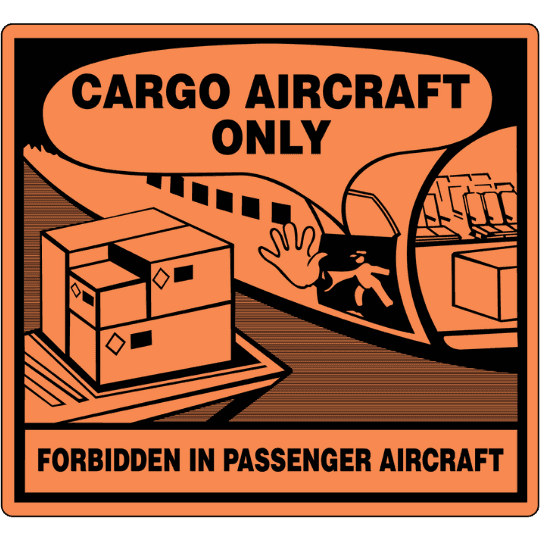
CARGO AIRCRAFT ONLY
Dedicated freighter aircraft carry no passengers. As a result, larger quantities per shipment are allowed, but these flights are less frequent and serve fewer routes:

  • Packing instruction — PI 361

  • Max net quantity — 30 L

Packing Instructions

UN 1993 (Flammable liquid) PG I is a dangerous good and poses a risk on aircraft.

To mitigate this risk, quantities are limited, but this alone is not sufficient. Each shipment must comply with strict packing, packaging, marking, labelling, and documentation requirements.

All of these requirements are consolidated in what is called the Packing Instruction.

PASSENGER AIRCRAFT
Passenger aircraft operate flights that carry passengers. Because people are on board, the maximum quantity allowed per package is lower:

  • Packing instruction — PI 351

  • Max net quantity — 1 L

CARGO AIRCRAFT ONLY
Dedicated freighter aircraft carry no passengers. As a result, larger quantities per shipment are allowed, but these flights are less frequent and serve fewer routes:

  • Packing instruction — PI 361

  • Max net quantity — 30 L

Permitted Packaging Types

Here are the permitted packaging configurations for UN 1993 (Flammable liquid) PG I:

  • Passenger aircratft — only combination packaging (inner + outer packaging)

  • Cargo aircraft — single packaging, combination or composite packaging

  • Excepted quantity — only combination packaging (inner + intermediate + outer packaging)

On passenger aircraft and cargo aircraft, multiple outer packaging types (materials and shapes) are permitted provided each is tested and certified to the following requirements:
UN Packing Group I (performance standards)

Packaging types and packaging systems (single, combination, composite packagings) varie depending of the packaging instructions, special provisions, country and airline restrictions.

Permitted Packaging Types

Here are the permitted packaging configurations for UN 1993 (Flammable liquid) PG I:

  • Passenger aircratft — only combination packaging (inner + outer packaging)

  • Cargo aircraft — single packaging, combination or composite packaging

  • Excepted quantity — only combination packaging (inner + intermediate + outer packaging)

On passenger aircraft and cargo aircraft, multiple outer packaging types (materials and shapes) are permitted provided each is tested and certified to the following requirements:
UN Packing Group I (performance standards)

Packaging types and packaging systems (single, combination, composite packagings) varie depending of the packaging instructions, special provisions, country and airline restrictions.

MANUFACTURED BY US

UN-SPECIFICATION 4G corrugated FIBREBOARD box IS PERMITTED

We manufacture UN-specification corrugated fibreboard boxes certified for Packing Group I shipments, including UN 1993 (Flammable liquid).

MANUFACTURED BY US

UN-SPECIFICATION 4G corrugated FIBREBOARD box IS PERMITTED

We manufacture UN-specification corrugated fibreboard boxes certified for Packing Group I shipments, including UN 1993 (Flammable liquid).

Excepted & Limited Quantity Exemptions

Exemptions allow you to ship smaller quantities under simplified rules, with reduced packaging, marking, and documentation compared to a full shipment. They don’t remove the hazard classification—only the amount of compliance work required.

EXCEPTED QUANTITY

  • Max net quantity — 300 mL

  • Check carefully the inner packaging strict quantity limits

Excepted & Limited Quantity Exemptions

Exemptions allow you to ship smaller quantities under simplified rules, with reduced packaging, marking, and documentation compared to a full shipment. They don’t remove the hazard classification—only the amount of compliance work required.

EXCEPTED QUANTITY

  • Max net quantity — 300 mL

  • Check carefully the inner packaging strict quantity limits

Package Labels & Marks

Labels and marks communicate hazards and shipping methods to ground handlers, airline crew, and emergency responders at a glance—without anyone needing to open the package or check the paperwork first.

MARKING

  • Packaging specification (packaging manufacturer)

  • Consignor

  • Consignee

  • UN/ID number

  • Proper shipping name

  • Max net quantity per package

  • Excepted quantity (if applicable)

LABELLING

  • Class 3 — Flammable liquid

  • Cargo Aircraft Only (if applicable)

  • Package orientation


Other marking and labelling requirements must be applied for overpack, environmentally hazardous substances, lithium ion batteries, magnetized materials.

Package Labels & Marks

Labels and marks communicate hazards and shipping methods to ground handlers, airline crew, and emergency responders at a glance—without anyone needing to open the package or check the paperwork first.

MARKING

  • Packaging specification (packaging manufacturer)

  • Consignor

  • Consignee

  • UN/ID number

  • Proper shipping name

  • Max net quantity per package

  • Excepted quantity (if applicable)

LABELLING

  • Class 3 — Flammable liquid

  • Cargo Aircraft Only (if applicable)

  • Package orientation


Other marking and labelling requirements must be applied for overpack, environmentally hazardous substances, lithium ion batteries, magnetized materials.

1 SPECIAL PROVISION(S)

Special Provisions

The ICAO/IATA Dangerous Goods Regulations include several hundred special provisions —additional requirements assigned to specific UN numbers, beyond the standard packing instructions.

When a special provision applies, it overrides the packing instruction and quantity rules shown above. 

It may add packaging conditions, restrict a shipping method that would otherwise be allowed, require extra documentation, or impose limits not mentioned in the general rules. 

The packing instruction alone is never the full picture. It must cross-reference with the special provisions that apply to a specific UN/ID number. 

UN 1993 (Flammable liquid) PG I is subject to 1 special(s) provision(s).

1 SPECIAL PROVISION(S)

Special Provisions

The ICAO/IATA Dangerous Goods Regulations include several hundred special provisions —additional requirements assigned to specific UN numbers, beyond the standard packing instructions.

When a special provision applies, it overrides the packing instruction and quantity rules shown above. 

It may add packaging conditions, restrict a shipping method that would otherwise be allowed, require extra documentation, or impose limits not mentioned in the general rules. 

The packing instruction alone is never the full picture. It must cross-reference with the special provisions that apply to a specific UN/ID number. 

UN 1993 (Flammable liquid) PG I is subject to 1 special(s) provision(s).

RESTRICTED IN 3 COUNTRY(S)

country restrictions

Some countries impose dangerous goods requirements that are stricter than the ICAO/IATA regulations for goods entering, leaving, or transiting their territory.

When country restrictions apply to a specific UN/ID number, it overrides the standard rules shown above — a country may limit quantities, require additional approval, or prohibit a shipping method that ICAO/IATA would otherwise permit.

UN 1993 (Flammable liquid) PG I is subject to restrictions by 3 countries.

RESTRICTED IN 3 COUNTRY(S)

country restrictions

Some countries impose dangerous goods requirements that are stricter than the ICAO/IATA regulations for goods entering, leaving, or transiting their territory.

When country restrictions apply to a specific UN/ID number, it overrides the standard rules shown above — a country may limit quantities, require additional approval, or prohibit a shipping method that ICAO/IATA would otherwise permit.

UN 1993 (Flammable liquid) PG I is subject to restrictions by 3 countries.

RESTRICTED ON 36 AIRLINE(S)

airline operator restrictions

Individual airline operators may impose dangerous goods requirements that are stricter than ICAO/IATA regulations. An airline operator may refuse carriage entirely, reduce the allowable quantity below the standard limits, or impose additional handling requirements. 

Where an airline operator restriction applies, it overrides the general rules shown above for that specific carrier.

UN 1993 (Flammable liquid) PG I is subject to restrictions by 36 airlines.

RESTRICTED ON 36 AIRLINE(S)

airline operator restrictions

Individual airline operators may impose dangerous goods requirements that are stricter than ICAO/IATA regulations. An airline operator may refuse carriage entirely, reduce the allowable quantity below the standard limits, or impose additional handling requirements. 

Where an airline operator restriction applies, it overrides the general rules shown above for that specific carrier.

UN 1993 (Flammable liquid) PG I is subject to restrictions by 36 airlines.

faq

What packing group is UN 1993 PG I?

Packing Group I - the highest of the three danger levels.

Can UN 1993 PG I be shipped on a passenger aircraft?

Yes, up to 1 L net per package but the instructions of PI 351 must be followed strictly.

Can UN 1993 PG I be shipped on a cargo-only aircraft?

Yes, up to 30 L net per package but the instructions of PI 361 must be followed strictly.

Is there a limited quantity exemption for UN 1993 PG I?

No. It is not allowed by the regulations.

Is there an excepted quantity exemption for UN 1993 PG I?

Yes, up to 300 mL net per package. Strict inner packaging quantity limits must be followed.

Is UN-Specification packagings required?

Yes if you ship under the packaging instructions PI 351 (Passenger) and PI 361 (Cargo). They are not required under the limited quantity and excepted quantity unless directly requested by special provisions, state restrictions and airline restrictions.

Is a shipper's declaration for dangerous goods required?

Yes if you ship under the packaging instructions PI 351 (Passenger), PI 361 (Cargo) and under the limited quantity exemption. It is not required under the excepted quantity unless directly requested by special provisions, state restrictions and airline restrictions.

What happens if UN 1993 PG I is mis-declared?

The shipment is refused and the shipper is fined. Not following the requirements of the regulation exposed the airline carrier to extreme liabilities. Some countries charge criminal penalties against the shipper in this case.

faq

What packing group is UN 1993 PG I?

Packing Group I - the highest of the three danger levels.

Can UN 1993 PG I be shipped on a passenger aircraft?

Yes, up to 1 L net per package but the instructions of PI 351 must be followed strictly.

Can UN 1993 PG I be shipped on a cargo-only aircraft?

Yes, up to 30 L net per package but the instructions of PI 361 must be followed strictly.

Is there a limited quantity exemption for UN 1993 PG I?

No. It is not allowed by the regulations.

Is there an excepted quantity exemption for UN 1993 PG I?

Yes, up to 300 mL net per package. Strict inner packaging quantity limits must be followed.

Is UN-Specification packagings required?

Yes if you ship under the packaging instructions PI 351 (Passenger) and PI 361 (Cargo). They are not required under the limited quantity and excepted quantity unless directly requested by special provisions, state restrictions and airline restrictions.

Is a shipper's declaration for dangerous goods required?

Yes if you ship under the packaging instructions PI 351 (Passenger), PI 361 (Cargo) and under the limited quantity exemption. It is not required under the excepted quantity unless directly requested by special provisions, state restrictions and airline restrictions.

What happens if UN 1993 PG I is mis-declared?

The shipment is refused and the shipper is fined. Not following the requirements of the regulation exposed the airline carrier to extreme liabilities. Some countries charge criminal penalties against the shipper in this case.

Products & Industries

UN 1993 (Flammable liquid) PG I isn’t shipped only on its own—it’s also a component in certain finished products, within specific product categories, and sold across particular industries:

  • Cosmetics & Personal Care (Coming Soon)

  • Flagrance (Coming Soon)

  • Hair Colorant (Coming Soon)

Products & Industries

UN 1993 (Flammable liquid) PG I isn’t shipped only on its own—it’s also a component in certain finished products, within specific product categories, and sold across particular industries:

  • Cosmetics & Personal Care (Coming Soon)

  • Flagrance (Coming Soon)

  • Hair Colorant (Coming Soon)